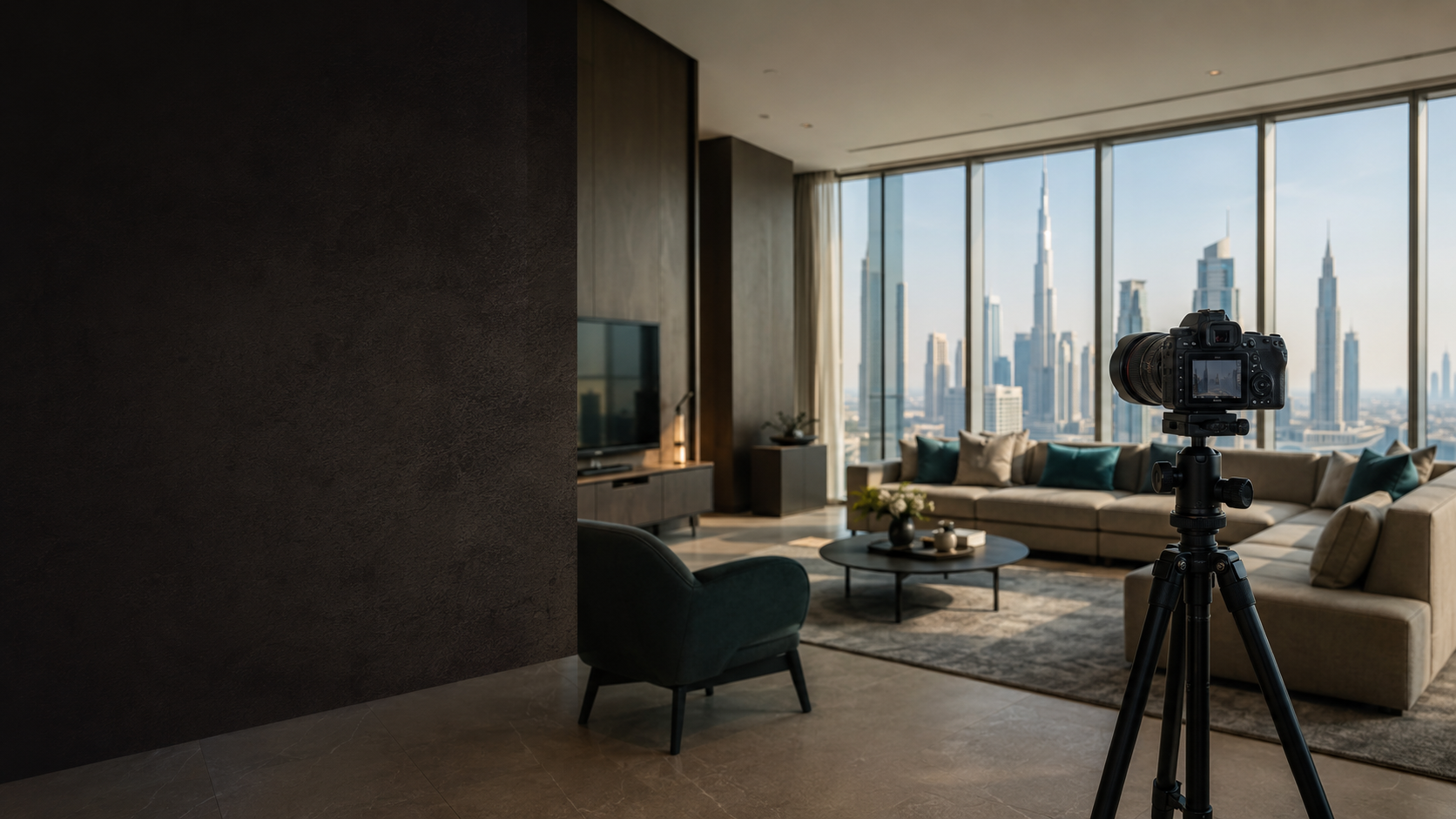
Your listing photographs do not change your property’s market value. They change how clearly buyers can see what you are offering.
Before a buyer visits your property, they will usually encounter it through a portal, a message from an agent or a social-media post. At that stage, the photographs, price and main specifications are the property.
If the images are dark, cluttered or difficult to understand, a suitable buyer may dismiss the listing before asking a question. Professional photography reduces that risk by presenting the property clearly, accurately and in a logical sequence.
Your online listing is the first viewing
A buyer scrolling through similar properties makes an initial decision quickly: open the listing, save it, contact the agent or continue scrolling.
Good photography helps the buyer answer basic questions without visiting:
- How large the rooms appear in relation to the furniture
- How the living room, kitchen and balcony connect
- How much natural light the property receives
- What the actual view is
- What condition the finishes are in
- Whether the property appears ready to occupy
The photographs should not attempt to make the property look larger, brighter or more upgraded than it is. Their job is to make the actual property easier to assess.
The same living room can create two different first impressions
The professional image does not create a better view, a larger room or newer furniture. It removes avoidable distractions and communicates the existing features more clearly.
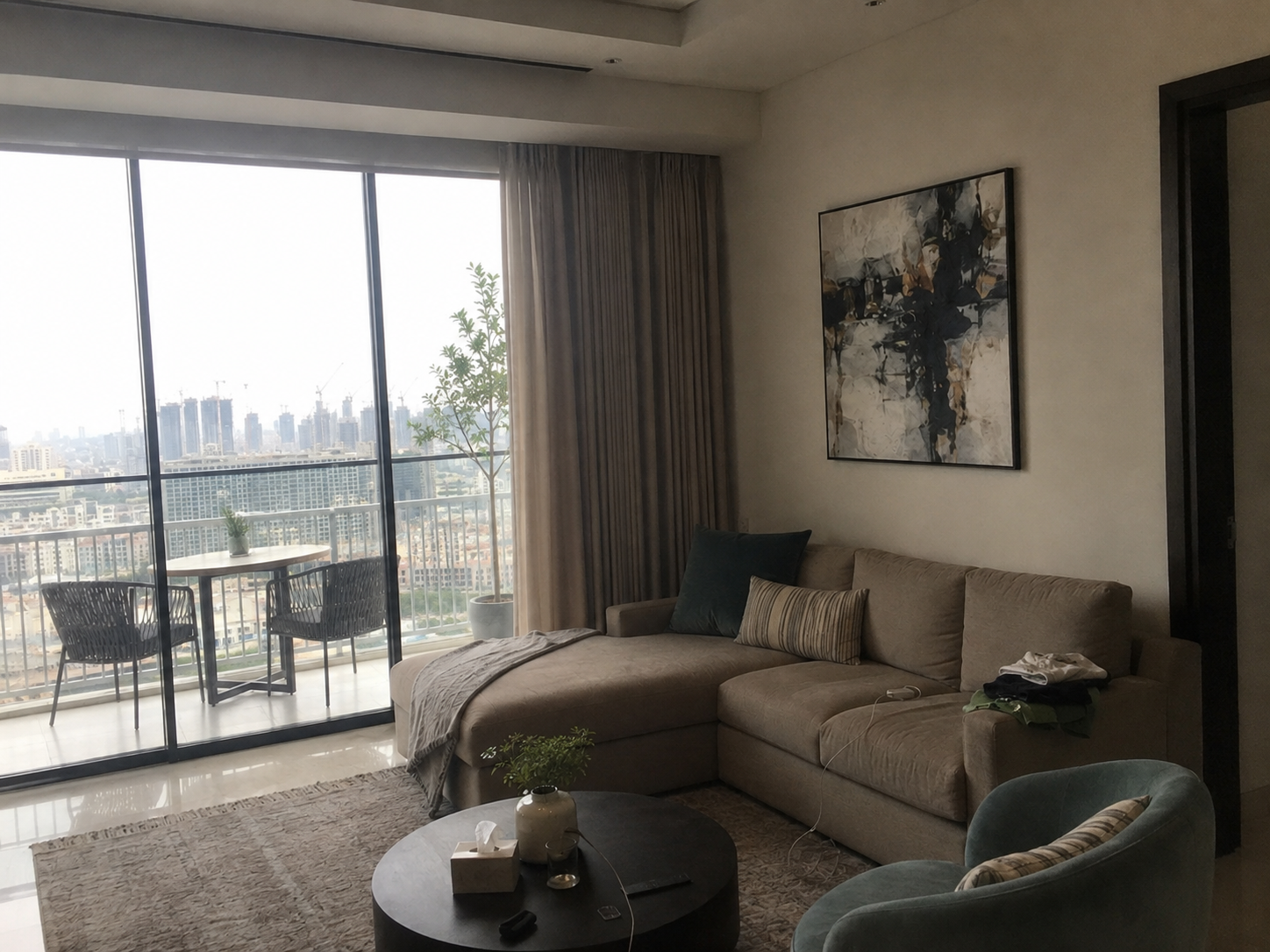
The bright window is difficult to balance, the room is underexposed, everyday items distract from the space and the crop does not explain the full layout.
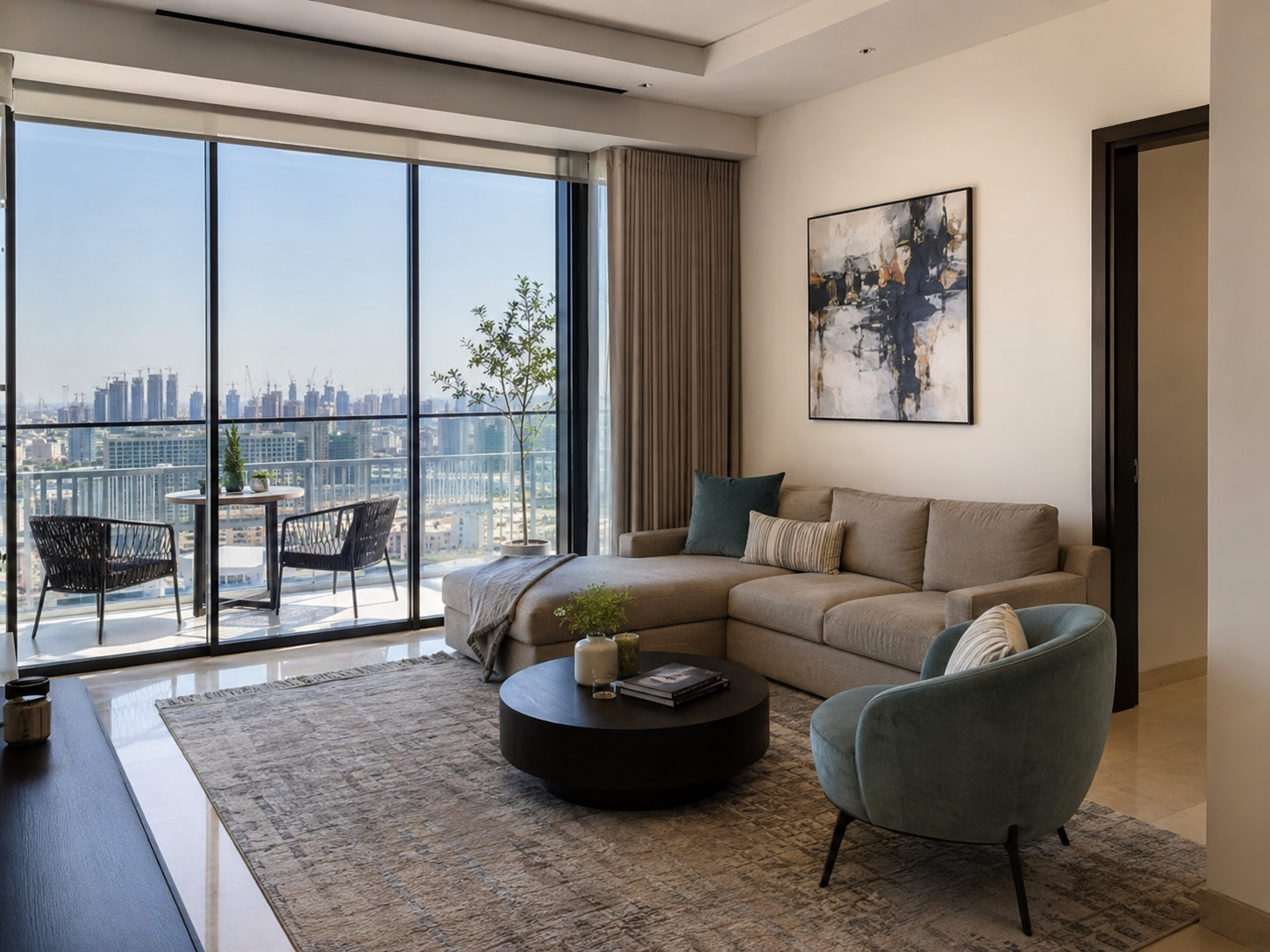
Balanced exposure retains the interior and view, straight lines make the room easier to read, and deliberate framing shows the seating area and its connection to the balcony.
Preparation matters as much as the camera
Professional equipment cannot fully compensate for a property that has not been prepared. Before photography, you and your agent should arrange for the property to be ready.
- Remove unnecessary personal items
- Clear kitchen and bathroom surfaces
- Make beds and arrange cushions
- Open curtains and blinds
- Replace failed light bulbs
- Clean windows, mirrors and reflective surfaces
- Remove cleaning equipment, bags and loose cables
- Present the balcony and outdoor areas
- Schedule the shoot for suitable natural light
The objective is not to strip the home of all character. It is to keep the room itself as the main subject.
Kitchen: surface preparation and colour accuracy
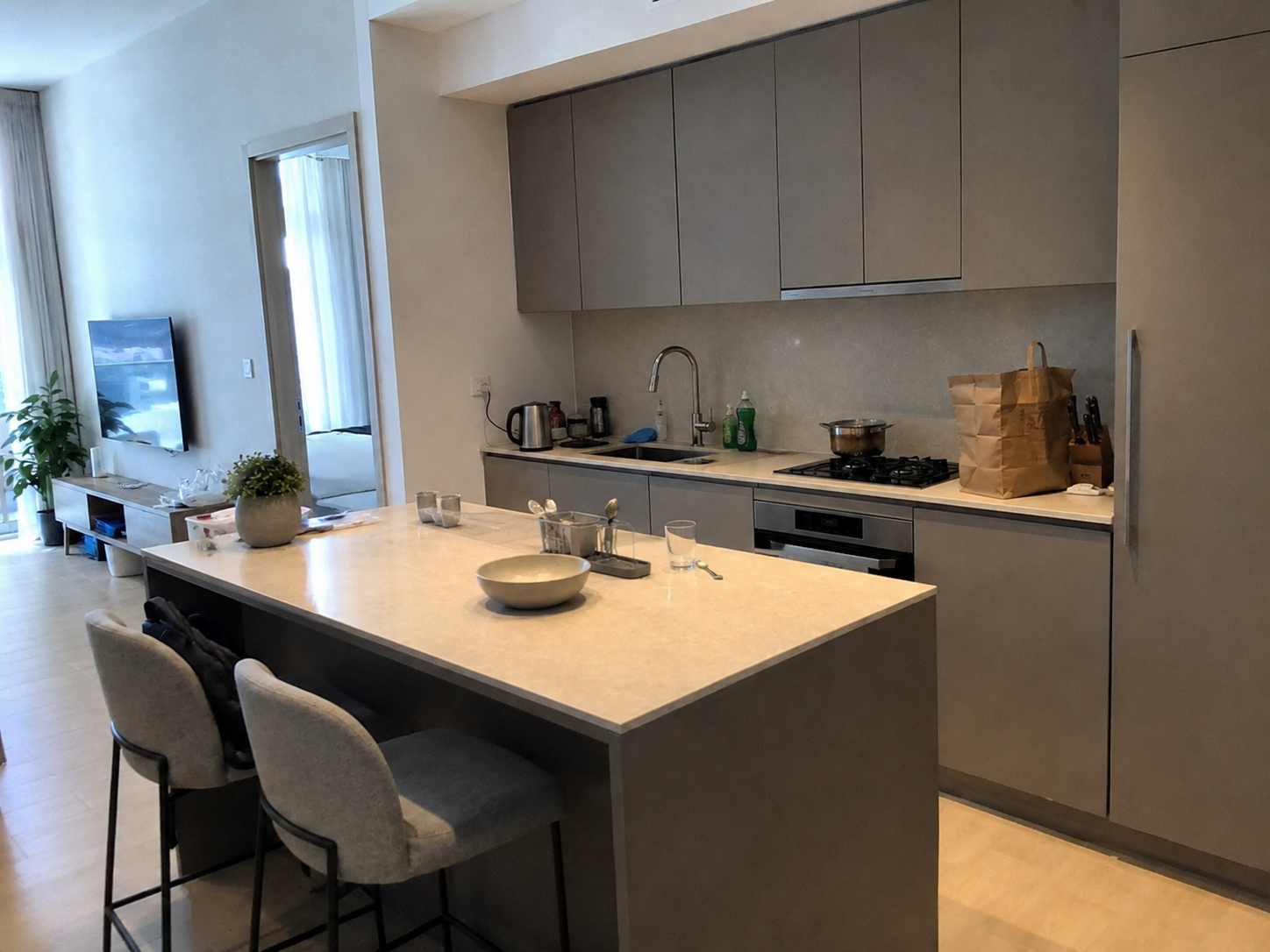
Appliances, groceries and loose utensils compete for attention. Mixed lighting changes the cabinet colour, while the angle allows the island to block part of the working area.
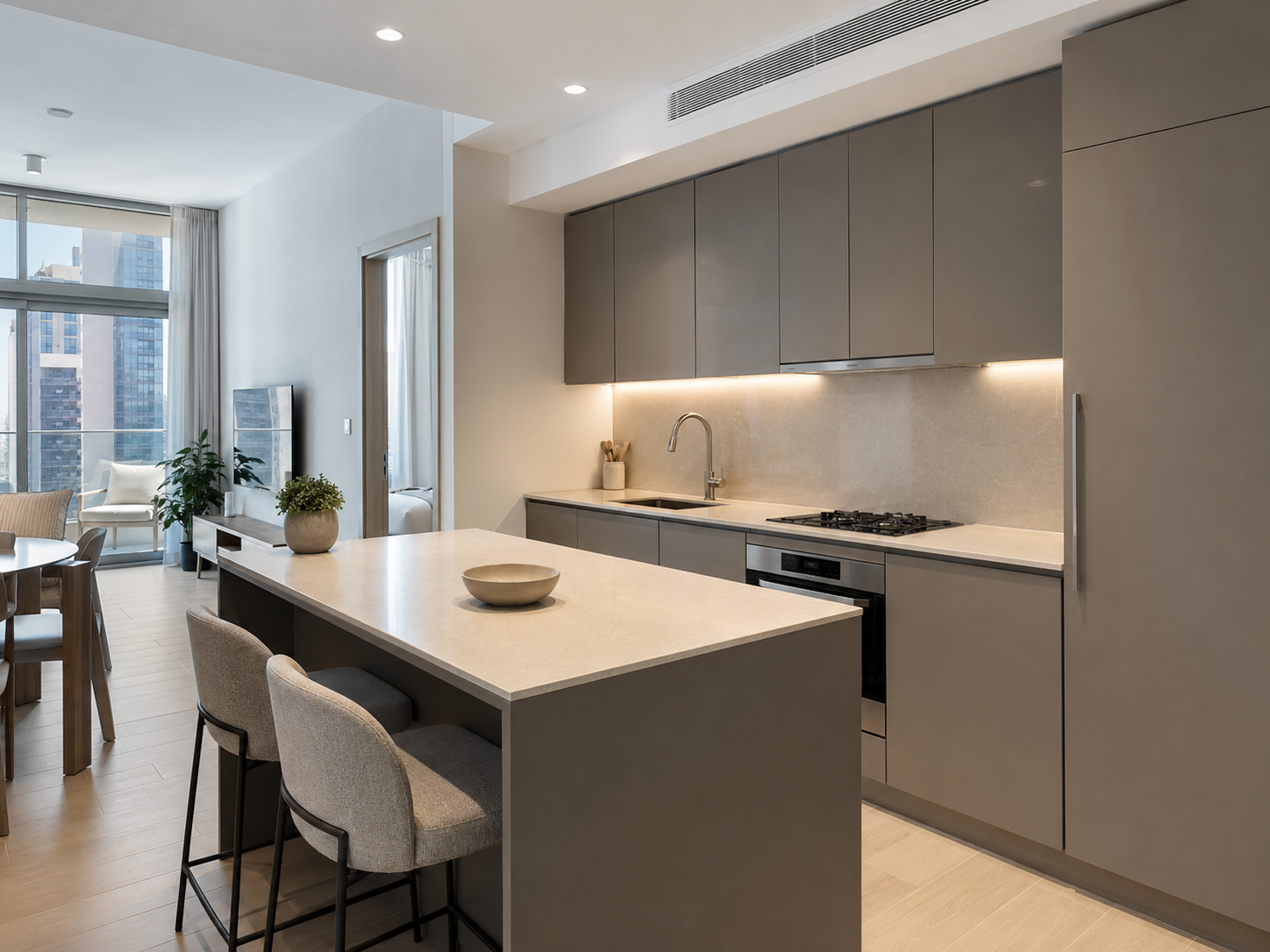
Cleared surfaces show the available worktop. Controlled light represents the finishes more accurately, and the composition explains storage, appliances and circulation.
In a kitchen, crowded surfaces can make a functional space appear smaller. Strong reflections or inaccurate colour can also make buyers uncertain about the condition of cabinets, worktops and appliances.
Bedroom: condition and usable space
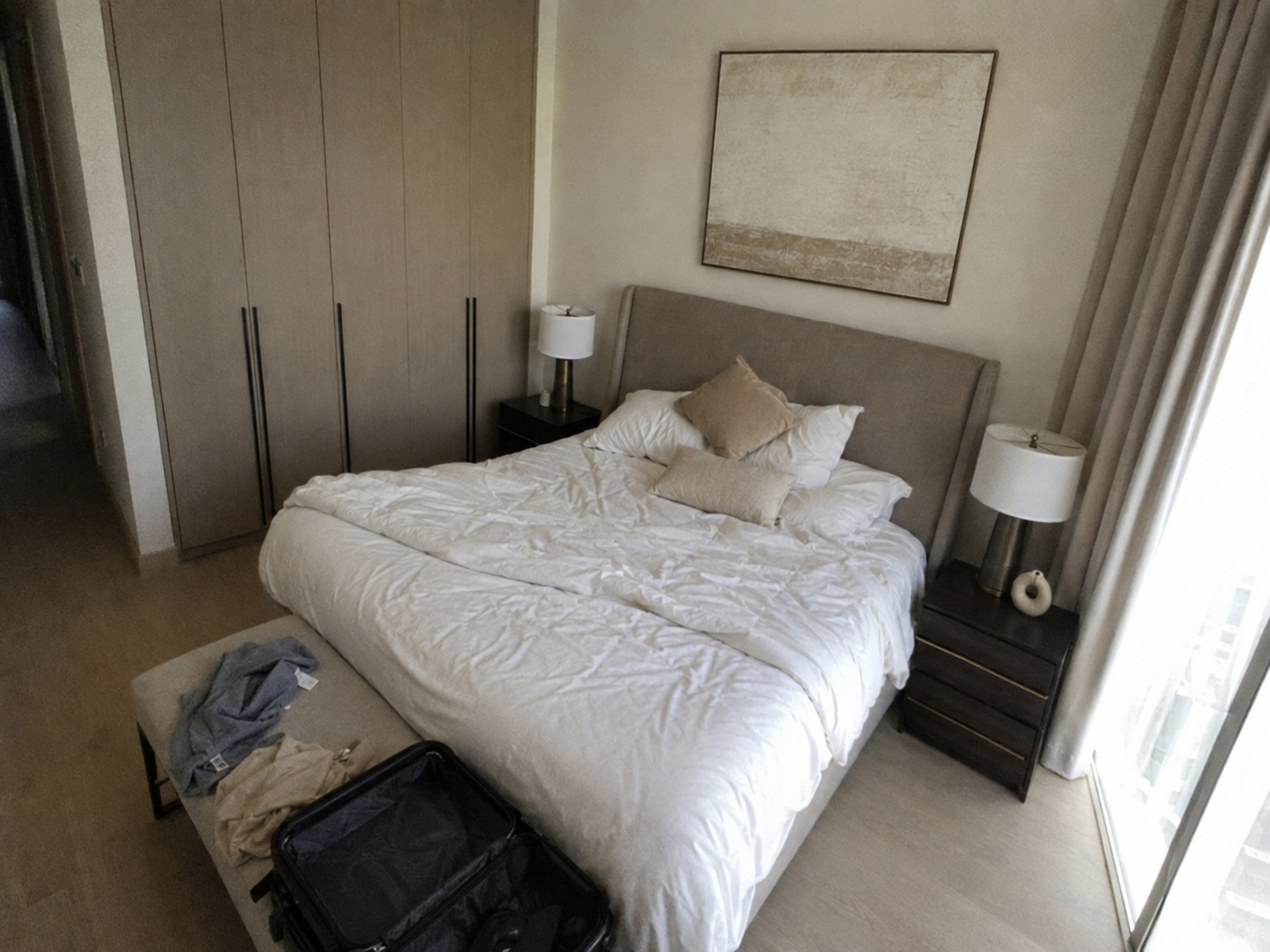
The unmade bed and luggage dominate the frame. The high angle compresses the room, the crop hides circulation space and the bright window loses exterior detail.
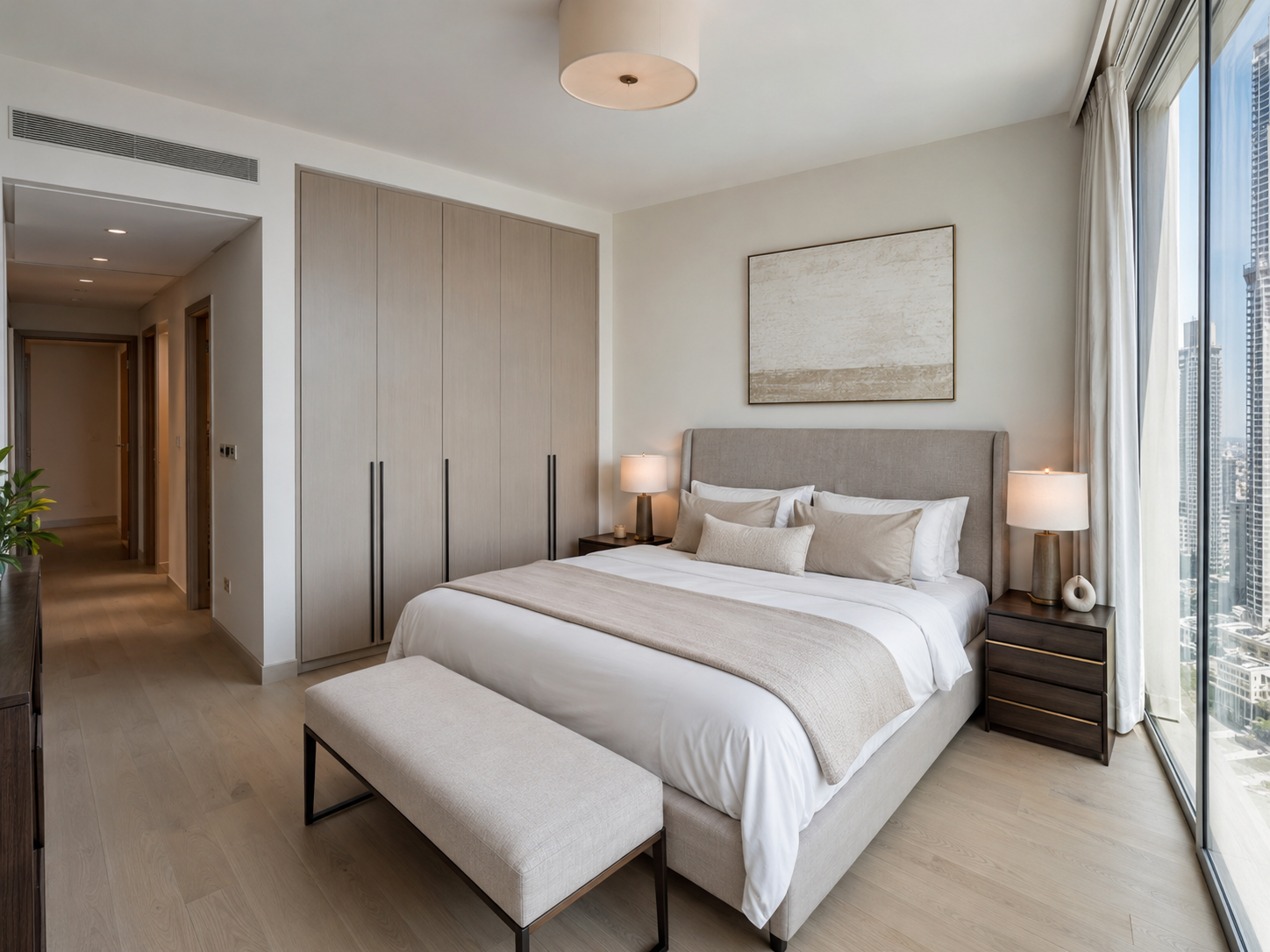
The prepared bed gives the buyer a neutral reference for scale. The wider controlled view shows the wardrobe, walking space and window together.
A bedroom photograph should help the buyer judge whether the room, storage and circulation suit their needs. Bedding and styling are secondary. The spatial information is the useful part.
Bathroom: reflections and mixed lighting
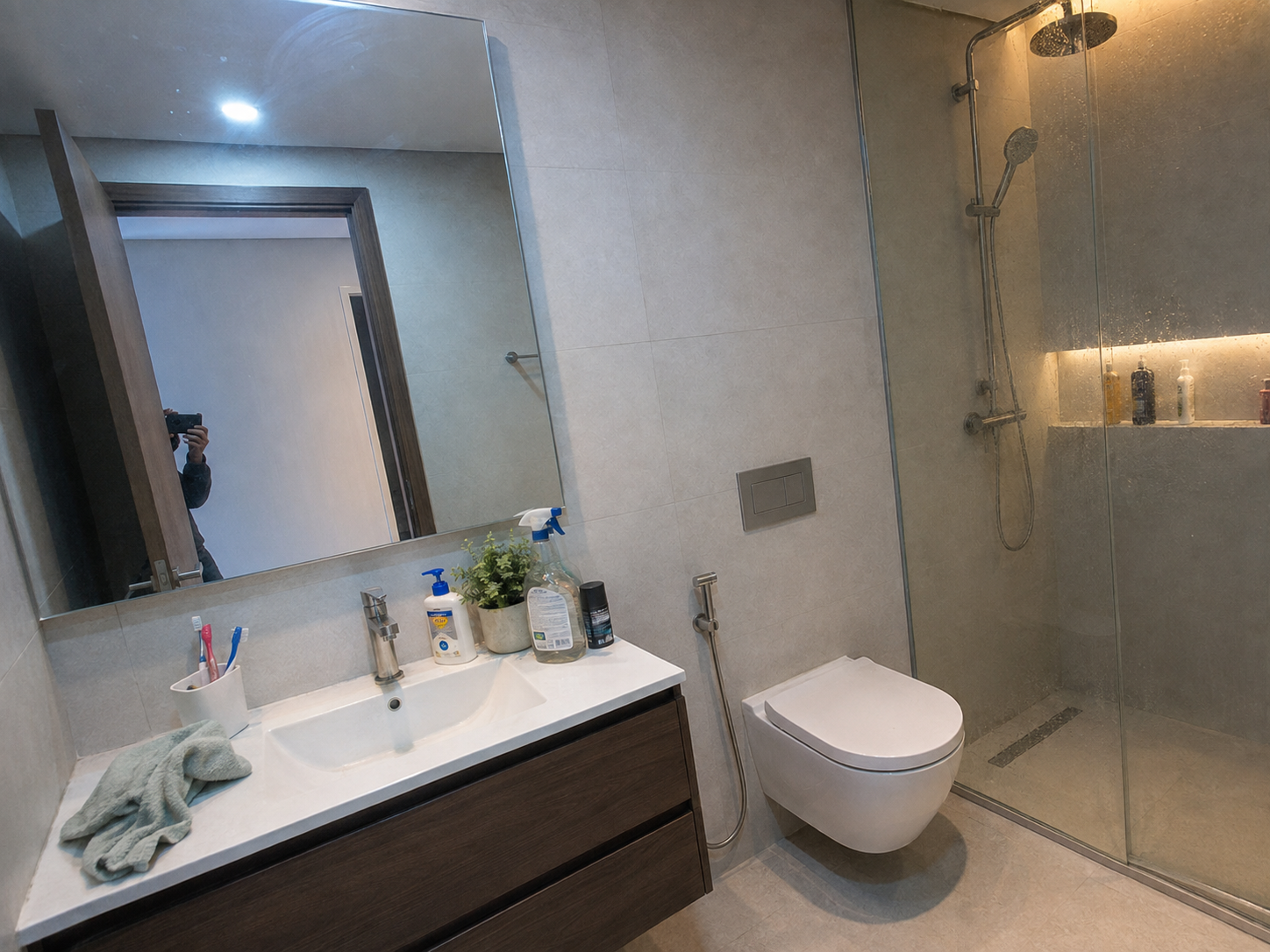
Toiletries and a damp towel obscure the vanity, the shower glass shows water marks, mixed light affects the tile colour and the photographer appears in the mirror.
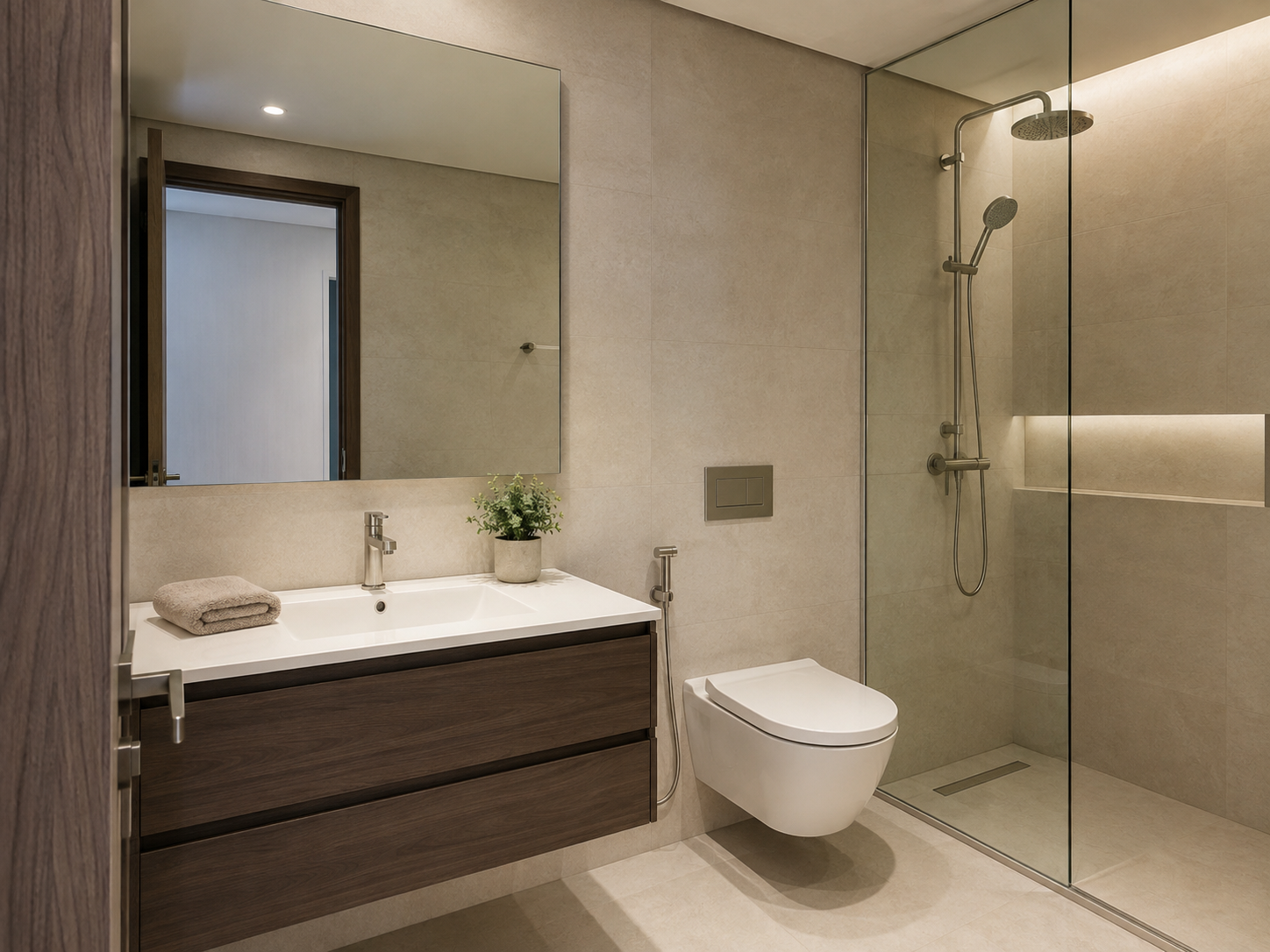
Clean surfaces expose the basin and storage, balanced light represents the tile colour more reliably, and controlled reflections keep attention on the room.
Bathrooms are difficult to photograph because mirrors, glass and small dimensions limit the available camera positions. A professional approach should control those issues without digitally removing a genuine defect.
What a complete image set should communicate
A complete set should do more than provide one attractive hero image. It should explain the property in sequence.
- Main living area
- Balcony and principal view
- Kitchen
- Primary bedroom
- Additional bedrooms
- Bathrooms
- Storage, study or utility spaces
- Building exterior and entrance
- Relevant shared facilities
The exact order depends on the property. A unit with a distinctive terrace may lead with the outdoor space. A renovated property may need closer images of the finishes. Every important space should be shown, but repetition does not add information.
Balcony and view: one frame has to handle two light levels
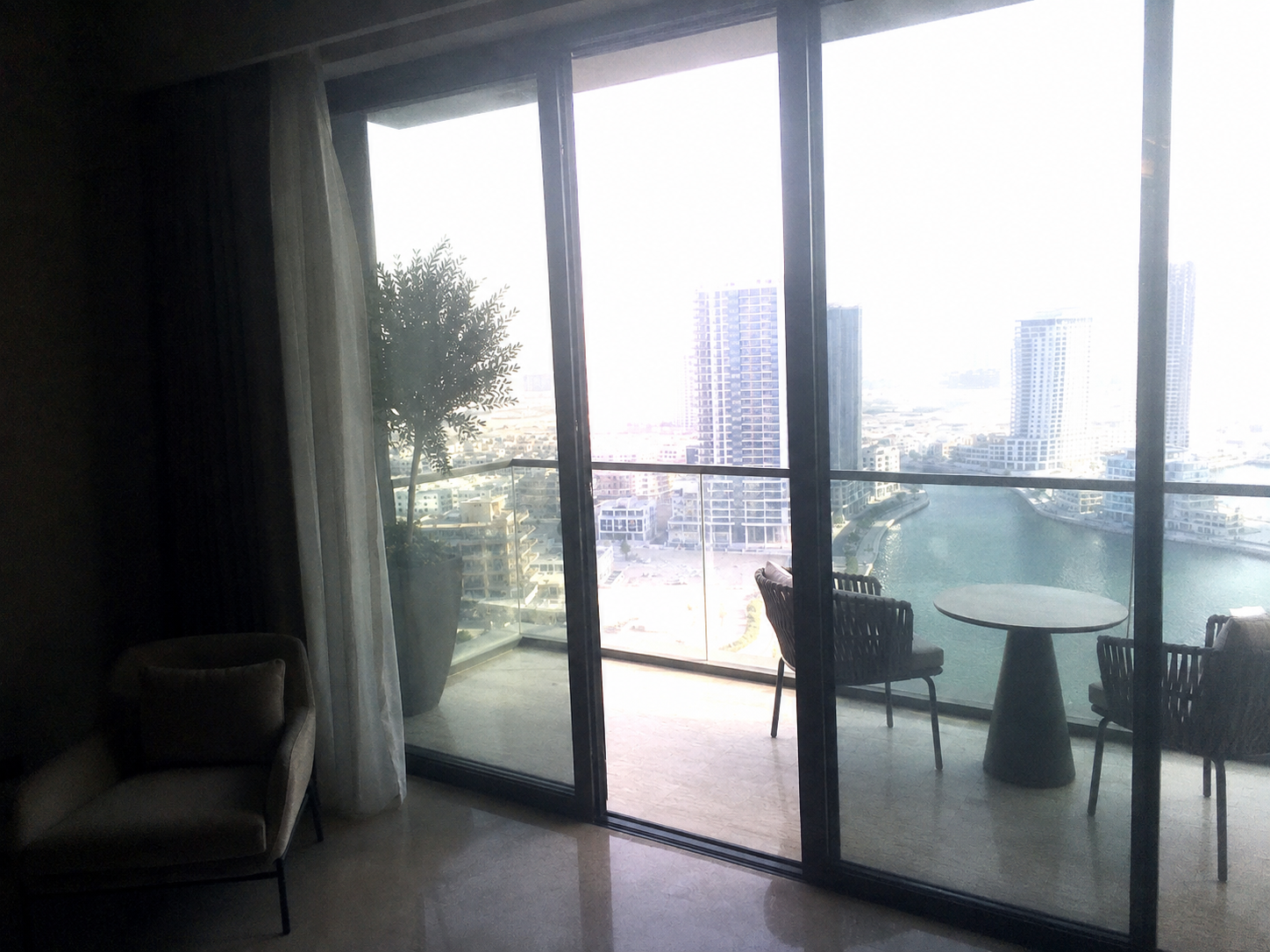
The camera exposes mainly for the bright exterior. The interior becomes dark, part of the skyline loses detail and reflections on the glass interfere with the view.
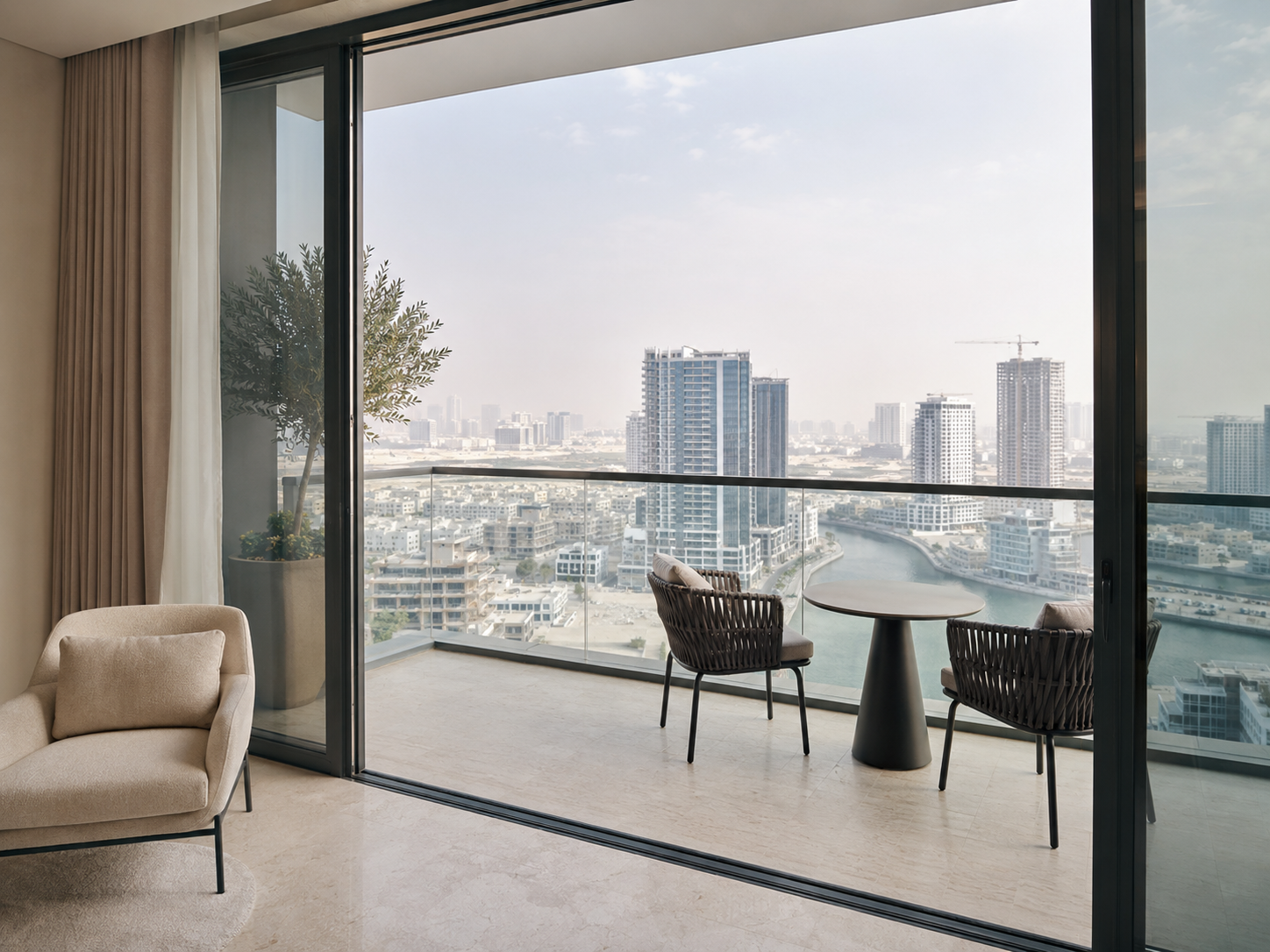
Balanced exposure retains usable detail inside and outside. The frame shows the balcony depth, furniture and genuine view without replacing the sky or exaggerating visibility.
Views often influence how buyers compare units within the same building. The photograph should not replace the sky, remove a neighbouring building or create a clearer view than the property actually has.
Weather and haze are real variables in Dubai. If the view is important to the listing, the shoot should be timed for suitable visibility where practical. Editing should remain within normal exposure and colour correction.
Exterior photography establishes the building context
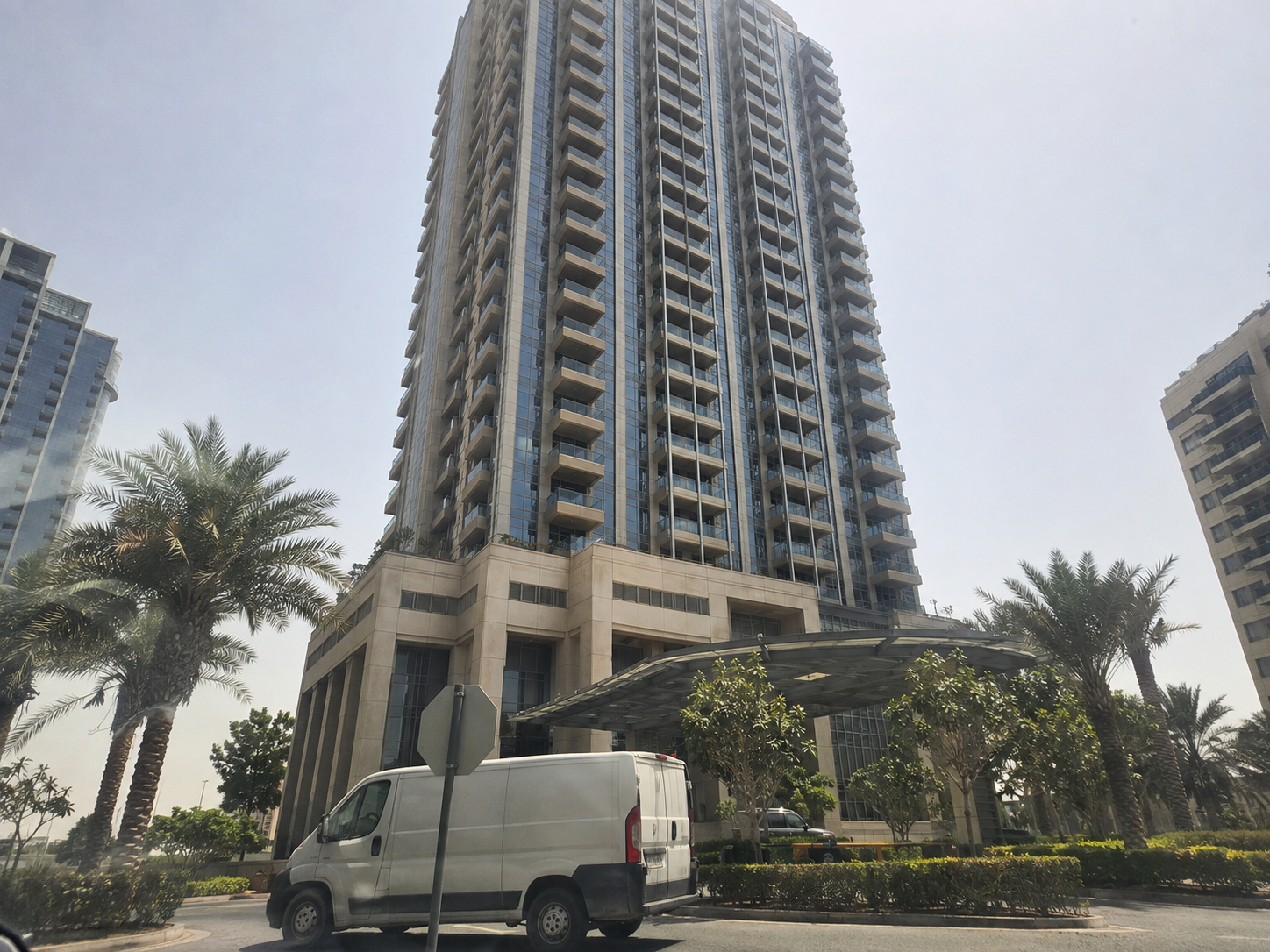
The close position causes strong converging lines, the building is tightly cropped and a van and sign obstruct the entrance. Harsh light hides podium detail.
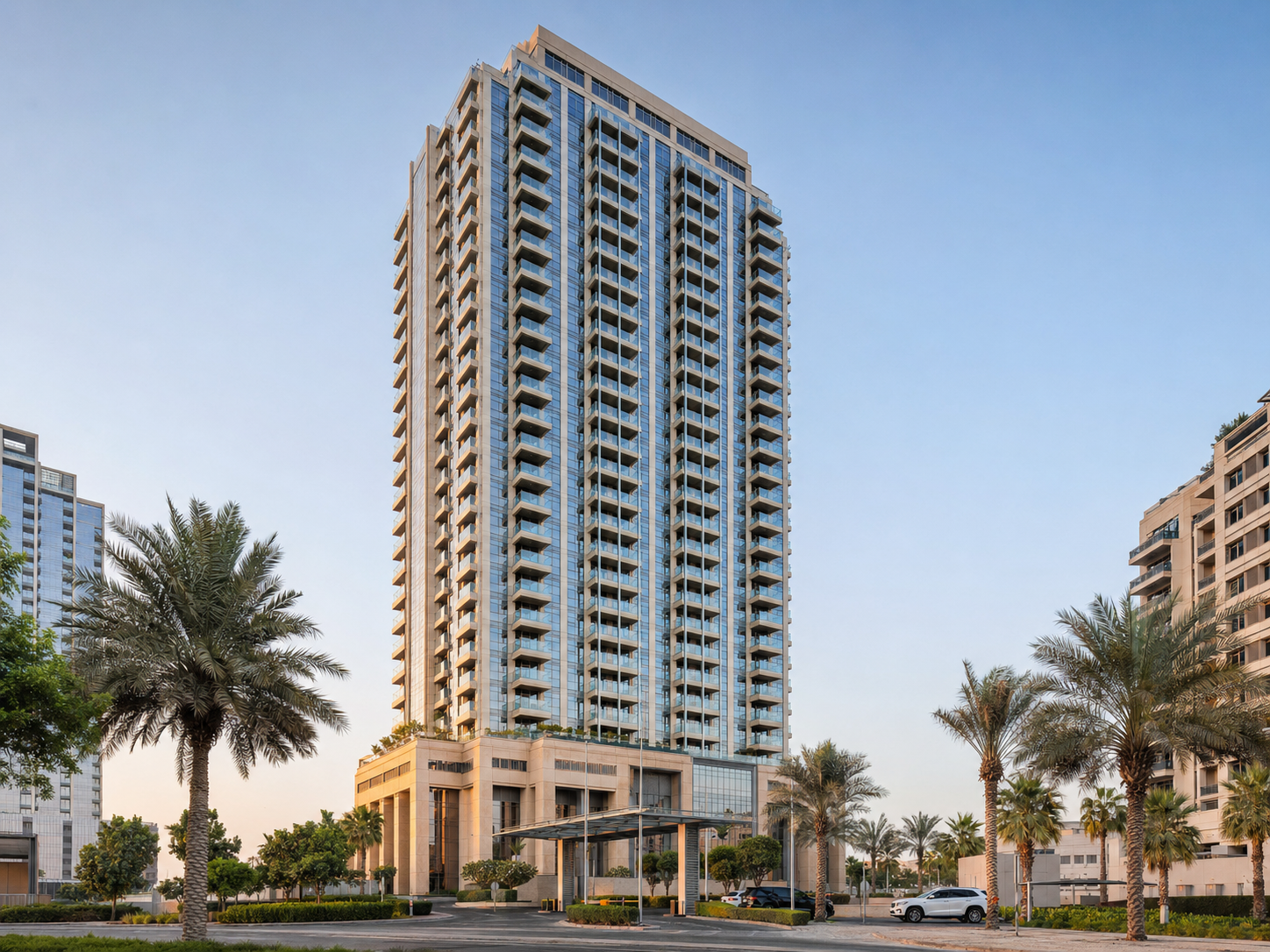
A considered position shows the whole tower, entrance and surrounding context. Corrected verticals and softer light make the architecture easier to understand.
The building exterior matters because buyers are not assessing only the internal unit. The arrival, entrance, podium and immediate surroundings form part of the property experience.
For a standard resale listing, one clear building image may be enough. If the development’s architecture, landscaping or waterfront position is a genuine advantage, additional exterior images can be useful. Generic neighbourhood images should not replace photographs of the actual building.
Professional should not mean misleading
There is a difference between correcting a photograph and changing the property.
- Correcting exposure and white balance
- Straightening vertical and horizontal lines
- Adjusting shadows and highlights within a natural range
- Cropping distractions at the edge of the frame
- Making consistent colour corrections across the image set
Practices that can mislead buyers include extreme wide-angle distortion, replacing a view, removing permanent defects, changing finishes, using outdated images, failing to clarify temporary staging and adding features that do not belong to the property.
Misleading images may increase initial clicks, but they create a gap between the listing and the viewing. That can waste time and reduce trust.
How photography can affect listing response
Professional presentation may influence listing views, saves, enquiries, viewing requests, enquiry quality and an agent’s willingness to share the listing with active buyers.
Photography alone does not prove market value, guarantee a faster sale or justify a higher asking price. Price, condition, location, occupancy, viewing access, competing inventory and buyer demand still determine the result.
If buyers see the property but rarely enquire, presentation may be one factor. If they enquire and view but repeatedly reject the price, the evidence points elsewhere. For a structured review, read How Long Should You Wait Before Reducing Your Asking Price?
What about a home-tour video?
Photography and video answer different questions. Photographs allow buyers to inspect rooms at their own pace. A home-tour video can show how the entrance connects to the living area, how rooms relate to one another and how indoor and outdoor areas connect.
An effective tour should follow a natural route, use stable movement and represent colour, exposure and proportions accurately. Captions can help viewers who watch without sound.
Photographs show the spaces. Video explains how those spaces connect.
Check presentation before blaming the price
New photographs may be required when your property has been upgraded, its furniture or staging has changed, the condition no longer matches the images, the original set is weak, the surroundings have changed or you are relaunching with a revised strategy.
If the listing response is weak, you and your agent should check:
- Are the specifications and photographs accurate?
- Is the property presented in a logical sequence?
- Are important rooms, the view and building shown clearly?
- Is the listing reaching the intended buyer group?
- Are enquiries progressing into viewings?
- Are competing properties presented more effectively?
- Is the same objection appearing repeatedly?
- Do completed transactions support the asking range?
Professional photography will not correct an unsupported price or remove a genuine disadvantage. It ensures that avoidable presentation problems are not the reason suitable buyers overlook your property.
Photography earns attention. Clear information helps the buyer decide whether to view. The property, price and terms determine whether that viewing progresses into an offer.
For more detail, read How to Set a Defensible Asking Price for a Dubai Property and Why Active Listings Do Not Determine Your Property’s Market Value.